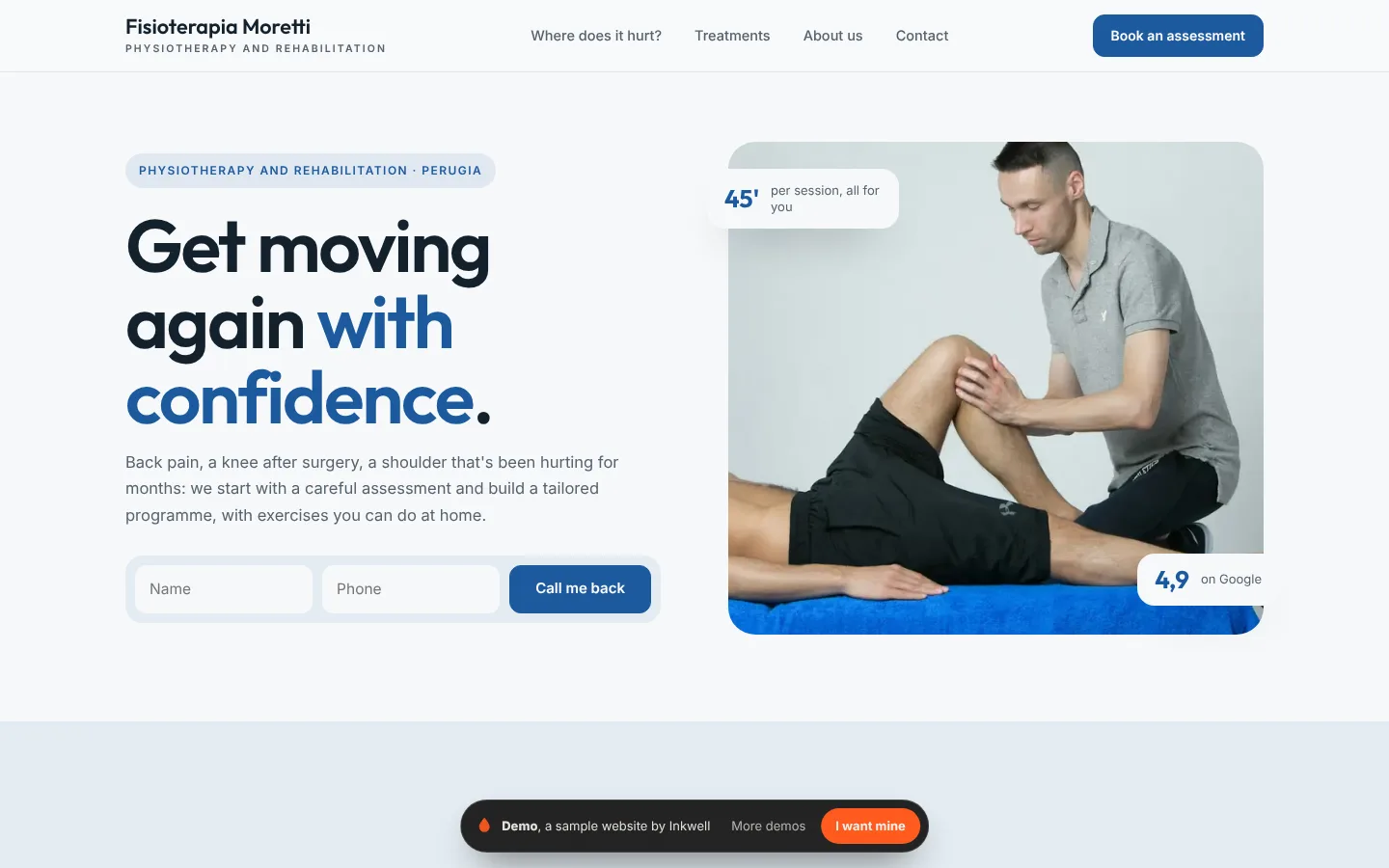
The phone rings mid-treatment
You can't answer with your hands on a patient. With online requests, new patients leave their details and you call them back when you're free.
The doctor says “you should have some physiotherapy”, and the patient opens Google: “physiotherapist” plus the name of the town, or “back pain what to do”. If you explain how you work, what it costs and how to book, you'll see that patient at your practice. If not, someone else will.
Across Italy, all done remotely: a video call, WhatsApp and a free preview of your website.
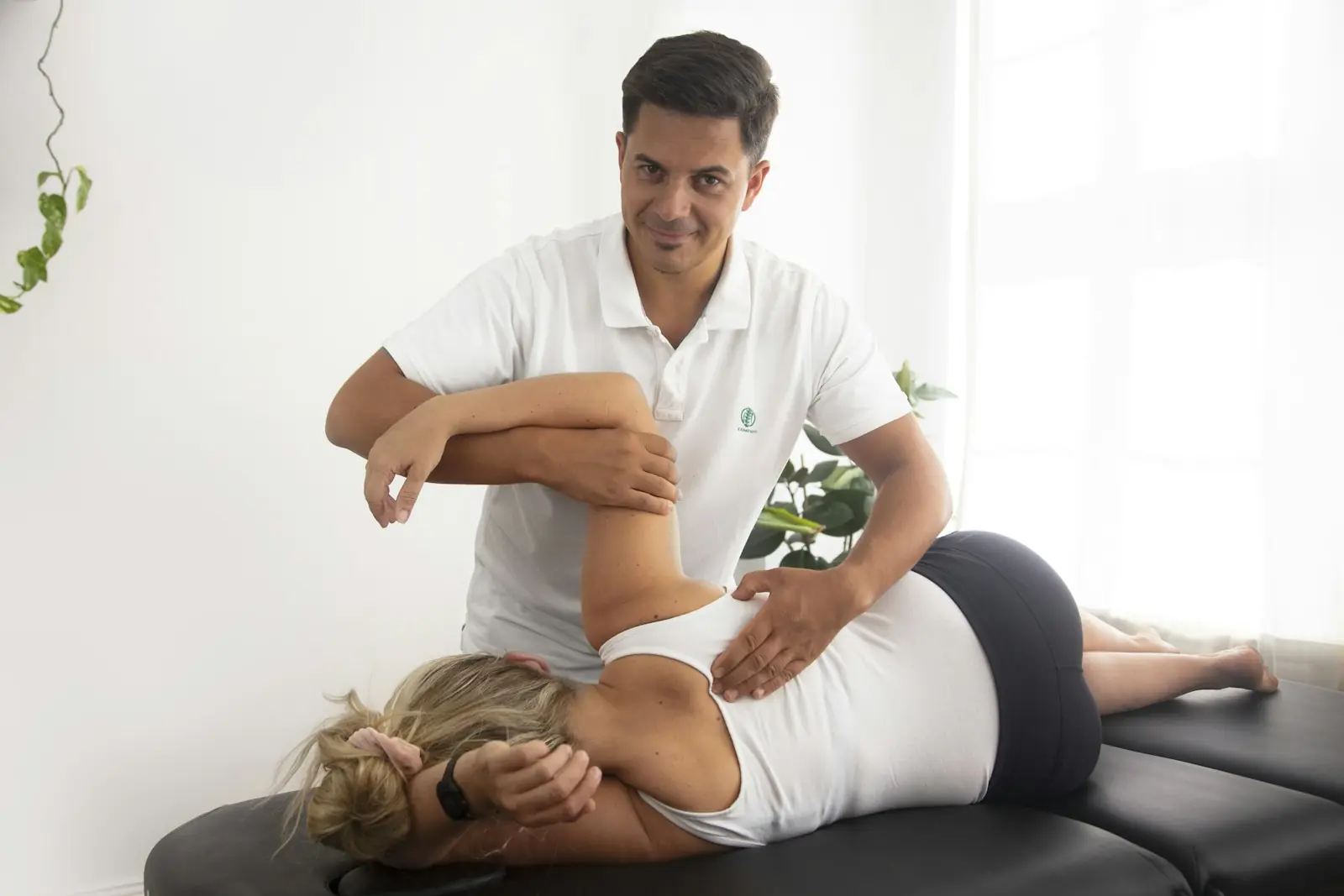
We see these every week, in almost every business we talk to. They're also the quickest to fix.
You can't answer with your hands on a patient. With online requests, new patients leave their details and you call them back when you're free.
Tecar therapy, shockwave, manual therapy: for someone in pain these are difficult words. Explained well, with duration and price, they help people choose with confidence.
Sports injuries, post-operative rehab, pelvic floor: if you have a speciality, it needs to show up where people are looking for you. A page for each area brings in the right patients.
Everything here is included in the package, not an extra to add later.
What they are, what they're for, how long they take and how much they cost. Plain language, no promises.
A form asking where it hurts and which times suit them: the request arrives complete and you plan your diary.
Who the physios are, what they specialise in, where they trained: patients choose the person.
On request, private pages with exercise videos to send to your patients.
Google reviews on show: for someone in pain they count for more than any slogan.
Map, parking, step-free access: details that matter when you're arriving on crutches.
Small details that really bring in enquiries on physiotherapy websites. We always include them, even in the simplest package.
People with back pain search for “back pain”, not the name of the therapy: the website is organised by complaint.
Knowing how long a session lasts and what it costs removes the biggest doubt before booking.
For a healthcare professional they're the first guarantee: they should be stated clearly, with your registration number.
Prices, timings and who owns the website: the things that matter, in plain words.
The Complete package, with treatments and prices, team, a form for the first assessment and Google Business Profile, costs €1,190, paid once. A page with an introduction, opening hours and contact details, the Essential package, costs €590. Domain and hosting are separate and registered in your name: around €30–60 a year.
True, verifiable information: qualifications, treatments, prices, opening hours. No promises of recovery and no messages that play on fear. We write informative copy and you approve it before it goes live.
For the first assessment, yes: people in pain want to do something right away, even at eleven at night. Follow-up sessions are usually booked at the practice, so the website doesn't complicate your diary.
Yes, across Italy. A video call to get to know each other, then we keep in touch on WhatsApp and send you previews to look at on your phone.
Yes: people looking for a physio want to know what they'll spend before they call.
The bare minimum: name, contact details and a line about the problem. Clinical details are collected at the practice, not on the website.
Our practical guides: real prices and what actually works, no beating about the bush.
How to ask customers for Google reviews with a direct link and QR code, how to reply to negative ones, and what to avoid so your profile isn't at risk.
GuideCookie banners, privacy notices and contact forms: what Italian law really asks of a small website, per the Garante's guidelines. No scaremongering.
GuideInstagram and Facebook help but don't replace a website: what each does well, what happens when someone Googles you, and how to make them work together.
We'll reply within 24 hours with a clear quote, free and with no obligation. If you're not convinced, you're still left with a list of things to fix.